
Palma de Mallorca is a city where architecture tells its story. From majestic Gothic structures to innovative contemporary buildings, each era has left its mark on the urban landscape.
At AR-Lab, we value this legacy and draw inspiration from it to create designs that engage in dialogue with the past while looking toward the future.
The Splendor of Gothic Architecture
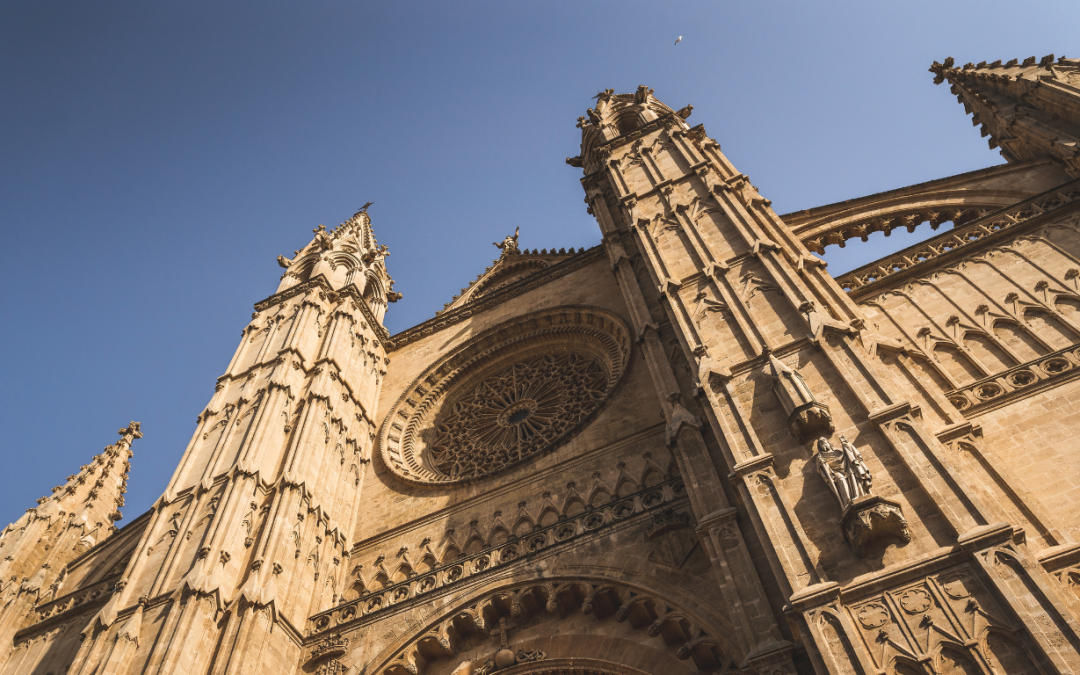
The Christian conquest in 1229 marked the beginning of a new architectural era in Palma. The Cathedral of Santa Maria, known as La Seu, is the greatest example of Gothic architecture on the island. Its construction began in the 13th century on the site of a former mosque and continued over several centuries. It stands out for its imposing rose window and its location facing the sea, symbolizing Mallorca’s connection with the Mediterranean.
Other notable examples of Gothic architecture in Palma include the Lonja of Palma, a 15th-century mercantile building, and Bellver Castle, a circular fortress unique in Spain.
Renaissance and Baroque: The Evolution Continues
The Renaissance brought a transformation in both civil and religious architecture. Palaces and noble houses adopted classical elements such as columns and pediments. The Church and Cloister of San Francisco is a prominent example of this period, combining Gothic and Baroque styles.
During the Baroque period, architecture became more ornate. Facades were enriched with decorative details, and churches were built with more elaborate interiors, reflecting the spirit of the Counter-Reformation.
Modernisme: Catalan Influence
In the late 19th and early 20th centuries, Modernisme left a distinctive mark on Palma. Architects such as Lluís Domènech i Montaner and Francisco Roca Simó introduced this style, characterized by organic forms and detailed ornamentation. The Gran Hotel and Can Casasayas are emblematic examples of this movement.
Contemporary Architecture: Innovation and Sustainability
In recent decades, Palma has embraced contemporary architecture, integrating modern design with respect for the environment. Buildings such as the Congress Palace and the Es Baluard Museum reflect this trend, combining functionality, aesthetics, and sustainability.
At AR-Lab, we draw inspiration from this architectural evolution to create spaces that harmonize with the history and landscape of Mallorca, incorporating advanced technologies and sustainable materials.
Our Approach at AR-Lab
At AR-Lab, we believe that every building tells a story and that true architecture emerges when past, present, and future coexist in balance.
We design spaces that adapt to people and their surroundings, combining aesthetics, functionality, and sustainability.
Contact us and discover how we can help you shape a project that respects the history of Mallorca.
